Two Little Wrigglers, One Screen: A Calm Guide to Private Scans for Twins and Multiples
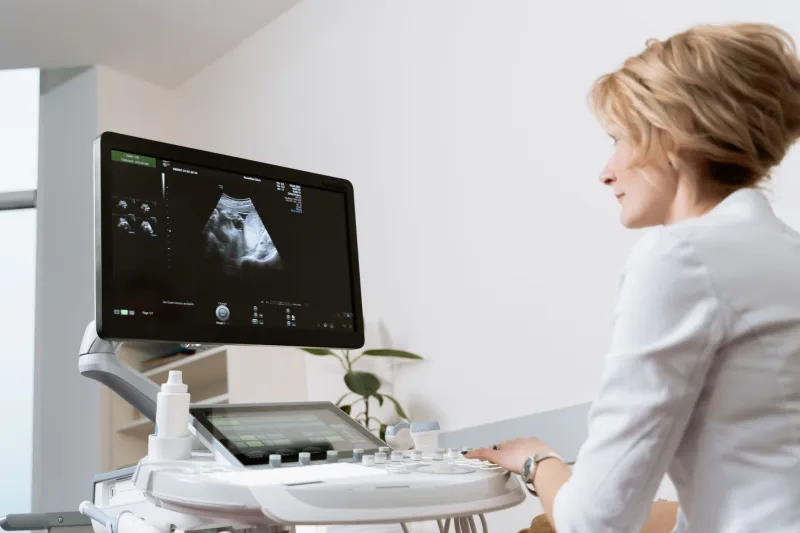
Finding out you are expecting twins — or triplets, or more — can feel like someone has turned the volume up on your pregnancy. Everything is suddenly doubled: the excitement, the questions, the appointments, and the amount of mental space it all takes up. A private baby scan can be a calm, reassuring moment in among the NHS dates, but it helps to know what is different when there is more than one baby on the screen.
This is not a medical checklist to replace advice from your midwife or obstetrician. It is a gentle, practical guide for UK families who want to make the most of a private scan when they are carrying multiples — without leaving the appointment feeling more muddled than when they arrived.
Why timing may feel different with multiples
With a singleton pregnancy, private scan timing often follows a fairly familiar pattern: an early reassurance scan, a dating scan, perhaps a gender scan, then later 3D or 4D images. With twins or higher-order multiples, the same scan types can still apply, but the questions around them shift.
An early private scan may be used to confirm how many gestational sacs are visible and whether there is more than one heartbeat. Later scans may look at how the babies are growing in relation to each other, and whether they share a placenta or have separate ones. That does not mean a private clinic replaces your NHS antenatal care — it does not — but it can offer extra reassurance and a quieter space to ask questions.
If you are unsure when to book, ask the clinic directly. Explain that you are expecting multiples and ask what they recommend for your stage of pregnancy. A good clinic will be honest about what can be seen at that point and whether waiting a week or two would give clearer information.
Sacs, placentas and the language of twins
Private scan reports and sonographer explanations can suddenly include words you have never had to think about before: dichorionic, monochorionic, separate sacs, shared placenta. You do not need to become fluent overnight. It is perfectly fine to ask for plain English.
In simple terms, the sonographer will be looking at how many babies are present, how many sacs they are in, and how the placentas are arranged. This matters because it affects how closely the pregnancy will be monitored by the NHS. A private scan can help you understand what is being seen, but the ongoing plan should always sit with your NHS team.
One useful question is: “Can you explain what you can see today, and what would need to be checked again later?” That keeps the appointment focused on information rather than guesswork. It also gives you something clear to take back to your midwife if needed.
The appointment itself: longer, busier, still yours
A multiples scan can take longer than a singleton scan. There are more positions to check, more measurements to take, and more chances that one baby is curled up while the other is doing a little gymnastic routine. The sonographer may need extra time and patience, and so may you.
That can mean booking a slot when you are not rushing to collect a toddler or get back to work. If the clinic offers longer appointment windows for multiple pregnancies, it is worth asking. Comfort matters too: loose clothing, a snack in your bag, and a bit of water can make the appointment kinder on you.
It is also fair to say that multiples scans can feel more clinical simply because there is more to look at. You may spend part of the appointment watching the sonographer concentrate rather than gazing at a perfect profile. That is normal. The quiet moments are still there — they just sometimes arrive between measurements.
Photos, keepsakes and managing expectations
Private scan clinics often offer photo packages, short videos, or heartbeat keepsakes. With twins, it is worth asking how images are handled. Do you get a photo of each baby? Are there joint images? If one baby is hiding, will the clinic try again or offer a reasonable alternative?
It is also worth being clear about what you want. Some parents want every possible image; others want one calm picture to show the grandparents. Neither is wrong. Ask about package limits before you book, especially if you are hoping for 3D or 4D images. Multiples can be trickier to capture because there is less room and more movement, so a clinic should be upfront about that rather than promising a perfect portrait.
A simple checklist for scan day
Before you go, jot down a few questions in your phone. It is easy to forget them once you are lying on the couch with a screen full of wriggling babies.
- How many babies can you see today, and how many sacs and placentas appear to be present?
- What can this scan tell me, and what can it not tell me?
- Will the appointment be longer because of the multiples?
- What photo or video options are included, and what happens if one baby will not pose?
- What should I pass on to my NHS midwife or consultant?
- When would you suggest a follow-up private scan, if at all?
You might also want to ask whether the clinic has experience scanning multiple pregnancies. It is not an awkward question. It is a sensible one.
Bringing someone with you — or keeping it quiet
Some private clinics allow one or two companions; others have tighter room limits. If you are bringing a partner, a friend or a grandparent, check the policy before the day. With multiples, the room can already feel full of equipment and staff, so knowing who can come in helps avoid a last-minute shuffle in the waiting area.
Equally, you are allowed to keep this appointment small. A private scan can be a lovely shared moment, but it can also be a quiet pause for you and your partner before the wider family group chat gets involved. There is no right way to do it.
After the scan: keep it simple
You may leave with a report, a set of images, and a head full of new terms. Give yourself a little breathing space afterwards. Write down anything the sonographer said that you want to mention to your midwife, and put the images somewhere safe rather than letting them disappear into a phone camera roll.
Most of all, remember that a private scan is a peek — a gentle extra look — not a replacement for your NHS care. With multiples, that peek can be especially special and especially practical. Ask your questions, take the photos you want, and let the appointment be a calm chapter in a pregnancy that is already beautifully busy.